Understanding Lung Cancer: Diagnosis, Staging, and Treatment in West Hills and Tarzana
Last Updated: 13 Oct, 2026
A lung cancer diagnosis brings a lot of information at once: the type of cancer, its stage, whether it has spread, which tests are still needed, and what treatment should come next. Two patients with lung cancer can face very different treatment decisions, which is why an accurate diagnosis and a clear understanding of the tumor are so important.
At Wellness Oncology & Hematology, our board-certified hematologist-oncologists, Omid S. Shaye, MD, Christopher Ho, MD, and Ashkan Lashkari, MD, provide lung cancer care for patients in West Hills, Tarzana, and throughout the San Fernando Valley. We evaluate the type and stage of the cancer, molecular and biomarker findings when appropriate, overall health, previous treatment, and individual goals before recommending a treatment plan.
What Is Lung Cancer?
Lung cancer begins when cells in the lung develop abnormal changes that allow them to grow and divide without the usual controls. These cells can eventually form a tumor, interfere with normal lung function, invade surrounding tissue, and spread through the lymphatic system or bloodstream.
Lung cancer is not one disease with one standard treatment. One of the first distinctions physicians make is whether the cancer is non-small cell lung cancer or small cell lung cancer. That classification affects how the disease is staged and which treatments are most likely to be considered.
Non-Small Cell Lung Cancer
Non-small cell lung cancer, or NSCLC, accounts for the majority of lung cancer diagnoses. It includes several subtypes, including:
Adenocarcinoma
Squamous cell carcinoma
Large cell carcinoma
NSCLC generally grows and spreads more slowly than small cell lung cancer, although its behavior varies considerably from one tumor to another. Depending on the stage and characteristics of the cancer, treatment may involve surgery, radiation therapy, chemotherapy, targeted therapy, immunotherapy, or a combination of approaches.
Small Cell Lung Cancer
Small cell lung cancer, or SCLC, is less common but typically grows and spreads more rapidly. It has a particularly strong association with tobacco use and is often diagnosed after the disease has extended beyond the original tumor.
SCLC is generally classified as limited-stage or extensive-stage disease rather than using the same staging framework applied to NSCLC. Treatment may include chemotherapy, immunotherapy, radiation therapy, or a combination of these approaches.
How Do NSCLC and SCLC Differ?
The distinction is more than terminology. NSCLC and SCLC can behave differently and respond to different treatment strategies.
| Feature | Non-Small Cell Lung Cancer | Small Cell Lung Cancer |
|---|---|---|
| Frequency | Accounts for most lung cancers | Less common |
| Growth pattern | Generally slower | Often grows and spreads more quickly |
| Common forms | Adenocarcinoma, squamous cell carcinoma, large cell carcinoma | Classified primarily as limited or extensive stage |
| Treatment | May include surgery, radiation, chemotherapy, targeted therapy, and immunotherapy | Commonly treated with systemic therapy, radiation, or a combination |
Your pathology results help your oncology team determine which type you have and what that means for the next stage of your evaluation.
What Causes Lung Cancer?
Smoking remains the most significant risk factor for lung cancer, but it is not the only one. Lung cancer can also develop in patients who have never smoked.
Factors associated with an increased risk include:
- Cigarette, cigar, or pipe smoking
- Long-term exposure to secondhand smoke
- Radon exposure
- Asbestos and certain occupational or industrial exposures
- Long-term exposure to air pollution
- Family history of lung cancer
Risk related to smoking generally increases with the amount and duration of tobacco exposure. Quitting smoking can lower risk over time, even after years of tobacco use.
Can You Develop Lung Cancer If You Have Never Smoked?
Yes. A history of smoking should never be treated as a requirement for considering lung cancer.
Lung cancer in patients who have never smoked may be associated with secondhand smoke, radon, occupational exposures, air pollution, family history, or other biological factors. Adenocarcinoma is a common type of lung cancer among nonsmokers, and molecular testing can be especially important because some tumors contain genetic alterations that may influence treatment options.
Persistent respiratory symptoms deserve medical evaluation regardless of smoking history.
Lung Cancer Symptoms and Early Warning Signs
One reason lung cancer can be difficult to detect early is that it may cause few or no noticeable symptoms at first. Symptoms often become more apparent as a tumor grows, affects the airways, or involves surrounding structures.
Possible warning signs include:
A cough that persists or changes over time
Chest discomfort or pain, particularly with coughing or deep breathing
Shortness of breath or wheezing
Hoarseness or a change in voice
Coughing up blood or rust-colored sputum
Recurrent respiratory infections
Unexplained fatigue
Loss of appetite
Unintentional weight loss
These symptoms do not automatically mean that a patient has lung cancer. Respiratory infections, asthma, chronic lung disease, and many other conditions can cause similar problems. What matters is whether symptoms are new, persistent, worsening, or otherwise unexplained.
Lung Cancer Screening With Low-Dose CT
Screening is different from testing performed because a patient already has symptoms. Its purpose is to look for lung cancer in individuals at increased risk before symptoms appear.
Low-dose computed tomography, or LDCT, produces detailed images of the lungs while using less radiation than a conventional diagnostic CT scan. For eligible adults, annual LDCT screening can identify suspicious lung abnormalities at an earlier stage.
Current U.S. Preventive Services Task Force recommendations include annual LDCT screening for adults who:
A pack-year reflects both the amount and duration of smoking. For example, smoking one pack per day for 20 years equals a 20 pack-year history.
Screening eligibility does not replace an individualized discussion with a physician. Age, smoking history, current health, previous imaging, and other factors can influence whether screening is appropriate.
How Is Lung Cancer Diagnosed?
An abnormality on a scan is not automatically lung cancer. Diagnosis usually involves several steps to determine whether cancer is present, identify the specific type, and establish how far it has spread.
Diagnostic Imaging
Imaging helps physicians locate suspicious areas and understand their size and relationship to nearby structures. Depending on the clinical situation, evaluation may include chest X-rays, CT scans, PET/CT imaging, or other studies.
Imaging can provide important information, but a scan alone does not always establish exactly what type of cancer is present.
Biopsy
A biopsy obtains cells or tissue that a pathologist can examine under a microscope. The method used depends in part on where the suspicious area is located.
Biopsy approaches can include bronchoscopy for certain tumors within or near the airways, image-guided needle biopsy for accessible lung lesions, or evaluation of pleural fluid when fluid has accumulated around the lung.
The pathology findings establish the cancer type and can provide tissue for additional testing.
Biomarker and Molecular Testing
For many patients, identifying lung cancer under the microscope is only part of the diagnostic process. The tumor may also need to be evaluated for molecular changes and biomarkers that can affect treatment selection.
Depending on the type and stage of lung cancer, testing may evaluate alterations involving genes such as EGFR, ALK, ROS1, KRAS, BRAF, MET, RET, and NTRK, as well as biomarkers such as PD-L1.
These results can help determine whether certain targeted therapies or immunotherapies should be considered. A biomarker result does not make a treatment decision by itself. We interpret it alongside the cancer type and stage, previous treatments, overall health, and other clinical factors.
Understanding Lung Cancer Stages
Staging describes how much cancer is present and where it is located. It is one of the most important pieces of information used when developing a treatment plan.
Non-Small Cell Lung Cancer Stages
NSCLC is commonly described from Stage 0 through Stage IV.
What It Generally Means
Cancer is present only in the innermost lining of the airway and has not invaded deeper lung tissue or spread to lymph nodes or distant sites.
Cancer is limited to the lung without lymph node involvement.
Cancer may be larger or involve certain nearby lymph nodes or structures.
Cancer has spread more extensively within the chest, including regional lymph nodes or nearby structures.
Cancer has spread beyond the original lung to areas such as the opposite lung, fluid around the lungs or heart, or distant organs.
The exact staging system is more detailed than this overview. Tumor size, lymph node involvement, tumor location, and sites of spread all matter.
Small Cell Lung Cancer Stages
Small cell lung cancer is often described as limited stage or extensive stage.
Limited-stage disease is generally confined to an area that can be encompassed within a defined radiation treatment field. Extensive-stage disease has spread more broadly, which may include the opposite lung, distant lymph nodes, or other organs.
Your oncologist will explain your individual stage rather than relying on the stage number or label alone.
Lung Cancer Treatment Options
There is no single treatment pathway for lung cancer. The right plan depends on whether the cancer is NSCLC or SCLC, its stage, molecular characteristics, previous treatment, overall health, and the patient’s goals and preferences.
At Wellness Oncology & Hematology, we use those factors to determine whether treatment should involve one therapy or a coordinated combination of approaches.
Surgery
Surgery may be considered for certain earlier-stage lung cancers that can be removed safely. Depending on the location and extent of the tumor, surgical treatment can involve removing a small section of lung tissue, a lobe, or, in selected circumstances, a larger portion of the lung.
Not every patient with early-stage disease is a surgical candidate, & surgery is only one part of the treatment discussion. Medical oncology care may also be needed before or after an operation.
Chemotherapy
Chemotherapy uses medications that circulate throughout the body to destroy cancer cells or interfere with their ability to grow.
Depending on the cancer, chemotherapy may be given before surgery, after surgery, together with radiation, or as systemic treatment for disease that has spread. It may also be combined with immunotherapy or other medications.
The drugs, number of cycles, and treatment schedule vary according to the individual treatment plan.
Radiation Therapy
Radiation therapy directs high-energy radiation toward cancer cells. It can serve several roles in lung cancer care.
For some patients, radiation is part of treatment intended to control cancer in a specific area. It may be combined with chemotherapy for certain locally advanced cancers or used when surgery is not appropriate. Radiation can also be used to address symptoms or cancer that has spread to particular locations.
Targeted Therapy
Targeted therapy has changed how certain forms of NSCLC are treated. Rather than treating lung cancer solely according to where it began, these medications act on particular molecular abnormalities that help drive tumor growth.
When molecular testing identifies an actionable alteration, a corresponding targeted medication may become part of the treatment plan. EGFR, ALK, ROS1, and several other molecular changes can influence treatment selection.
Not every lung cancer has a targetable alteration, which is why testing and interpretation by the oncology team matter.
Immunotherapy
Cancer can sometimes evade the immune system by taking advantage of signals that normally keep immune activity under control. Immune checkpoint inhibitors are designed to interfere with certain of those signals, helping the immune system recognize and respond to cancer.
Immunotherapy may be considered for some patients with NSCLC or SCLC. Depending on the tumor and clinical circumstances, it may be used alone or in combination with chemotherapy and other treatments.
Whether immunotherapy is appropriate depends on more than a single laboratory result. Cancer type, stage, biomarker findings, overall health, and previous treatment all factor into the decision.
Clinical Trials
Clinical trials evaluate new treatments, snew combinations of existing treatments, and different ways of using established therapies. For eligible patients, a clinical trial may provide another treatment option worth considering.
Our oncologists can discuss whether a clinical trial is relevant to your diagnosis and current point in treatment.
What Happens After a Lung Cancer Diagnosis?
The period immediately after diagnosis can be confusing because treatment does not always begin with a prescription or infusion. Before choosing therapy, the oncology team needs enough information to understand what is being treated.
Your Oncology Consultation
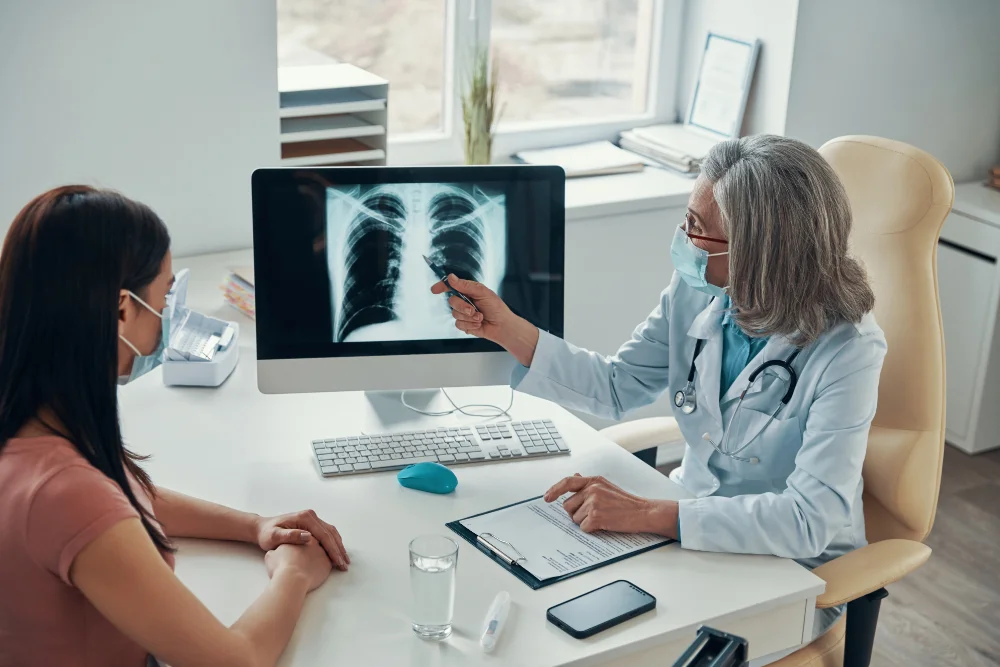
At your first visit, your oncologist reviews your medical history, symptoms, imaging, pathology, previous testing, current medications, and other relevant records. This is also the time to discuss what has already been established and which questions remain unanswered.
Completing the Diagnostic and Staging Workup
If additional information is needed, your oncologist may recommend further imaging, pathology review, biopsy, molecular testing, or other studies. The purpose is to establish the diagnosis and stage as accurately as possible before treatment decisions are finalized.
Building Your Treatment Plan
Once the necessary information is available, your oncologist explains which treatments are appropriate and why. The discussion may include surgery, radiation, chemotherapy, targeted therapy, immunotherapy, clinical trials, or a combination of approaches.
The plan also takes your overall health, priorities, & treatment goals into account.
Treatment and Monitoring
Once treatment begins, monitoring becomes part of the plan. Follow-up visits, laboratory testing, imaging, symptoms, and treatment tolerance can all provide information about how the cancer is responding.
Treatment may be adjusted when the clinical situation changes or when side effects require a different approach.
Supportive Care
Managing cancer means addressing more than the tumor itself. Supportive care can help patients manage treatment-related symptoms, fatigue, nausea, appetite changes, pain, breathing difficulties, and other concerns that affect daily life.
We incorporate symptom management and care coordination throughout treatment rather than treating them as separate from oncology care.
Lung Cancer Care at Wellness Oncology & Hematology
Patients with the same stage of lung cancer can still have very different tumors and different treatment needs. Our approach is built around understanding those differences before recommending therapy.
Wellness Oncology & Hematology provides care through our West Hills and Tarzana locations. Our board-certified hematologist-oncologists include Omid S. Shaye, MD, Christopher Ho, MD, and Ashkan Lashkari, MD. Our team incorporates biomarker and molecular testing when clinically appropriate and provides access to modern systemic treatments, including chemotherapy, targeted therapy, and immunotherapy.
Patients also have access to imaging through the Wellness Imaging Center, and our oncologists can evaluate whether clinical trial participation should be considered. Throughout care, we focus on clear explanations, treatment monitoring, side-effect management, and coordination with the other specialists involved in each patient’s treatment.
Frequently Asked Questions About Lung Cancer
Some lung cancers can be treated with curative intent, particularly when they are diagnosed at an earlier stage. The outlook depends on the cancer type, stage, molecular characteristics, overall health, and response to treatment. For advanced lung cancer, treatment may instead focus on controlling the disease, reducing symptoms, and helping patients maintain quality of life for as long as possible.
Yes. Patients who have never smoked can develop lung cancer. Factors may include secondhand smoke, radon, occupational exposures, air pollution, family history, and biological changes within the tumor. Smoking history should not be used to dismiss persistent respiratory symptoms.
There is no single survival rate that applies to every patient with lung cancer. Outcomes vary significantly according to the type of lung cancer, stage at diagnosis, tumor biology, overall health, available treatment options, and response to treatment. Your oncologist can put population-level survival statistics into context based on the specifics of your diagnosis.
Treatment may last from several weeks to many months or longer. Surgery, chemotherapy, radiation, immunotherapy, and targeted therapy all follow different schedules, and some systemic treatments may continue as long as they remain appropriate and effective. Your oncology team will explain the expected timeline for your particular plan.
An oncology consultation is appropriate when lung cancer has been diagnosed or testing strongly suggests a malignancy. An oncologist can help coordinate staging, determine whether additional pathology or biomarker testing is needed, and discuss treatment options. Patients who have symptoms but no diagnosis should first undergo the appropriate diagnostic evaluation.
Non-small cell lung cancer is the more common category and includes adenocarcinoma, squamous cell carcinoma, and large cell carcinoma. Small cell lung cancer is less common and generally grows and spreads more quickly. Because these cancers behave differently, identifying the type is essential when determining treatment.
Biomarker and molecular testing can identify characteristics of a tumor that may influence treatment. Certain molecular alterations may make a patient eligible for a targeted therapy, while biomarkers such as PD-L1 can contribute to decisions about immunotherapy. Testing recommendations depend on the type and stage of lung cancer and other clinical factors.
No. Chemotherapy affects rapidly dividing cells throughout the body, while targeted therapies are designed to interfere with specific molecular changes or pathways involved in the growth of certain cancers. Targeted therapy is only an option when the tumor and clinical situation support its use.
Yes, immunotherapy is an important treatment option for some patients with non-small cell or small cell lung cancer. It may be used alone or with other therapies depending on the diagnosis. Biomarker findings, cancer stage, overall health, and previous treatment can all influence whether immunotherapy is appropriate.
Yes. Lung cancer can spread through the lymphatic system or bloodstream. Depending on the type and stage, distant disease may involve areas such as the other lung, brain, bones, liver, or adrenal glands. Imaging and other staging studies help determine whether the cancer has spread and guide treatment planning.
Your oncologist will review your medical history, symptoms, imaging, pathology reports, laboratory results, and any treatment you have already received. The visit is also an opportunity to determine whether additional staging studies, pathology review, or biomarker testing are needed before a treatment plan can be finalized.
No. Chemotherapy is appropriate for some lung cancers, but it is not required for every patient. Treatment depends on whether the cancer is NSCLC or SCLC, its stage, molecular and biomarker findings, overall health, and other clinical factors. Depending on the diagnosis, treatment may involve surgery, radiation therapy, targeted therapy, immunotherapy, chemotherapy, or a combination of approaches.
Staging can involve CT imaging, PET/CT, brain imaging, biopsy, lymph node evaluation, and other tests depending on the individual situation. Your oncology team uses these findings to determine where the cancer is located and how that information affects treatment.
Supportive care can address symptoms and treatment side effects such as fatigue, nausea, pain, appetite changes, and breathing difficulties. Depending on individual needs, care may also involve nutritional guidance, palliative support, and coordination with pulmonary or other specialists.
Contact Wellness Oncology & Hematology to request a consultation at our West Hills or Tarzana location. Our team can help coordinate your appointment and let you know which medical records, imaging, pathology reports, or other information to bring with you.
Schedule a Lung Cancer Consultation in West Hills or Tarzana
If you have recently been diagnosed with lung cancer, are seeking another oncology opinion, or need help understanding the next step in treatment, our team can review your diagnosis and available options with you.