Last updated: Sept 20 2026
Bladder cancer is the sixth most common cancer in the United States, with an estimated 84,500 new cases diagnosed each year. When found at an earlier stage, bladder cancer is often highly treatable. At Wellness Oncology & Hematology, our board-certified oncology team in West Hills and Tarzana, California, provides personalized cancer care and works with urologists and other specialists involved in diagnosis and treatment. If you have been diagnosed with bladder cancer or referred for oncology care, schedule a consultation by phone or online.
What is bladder cancer?
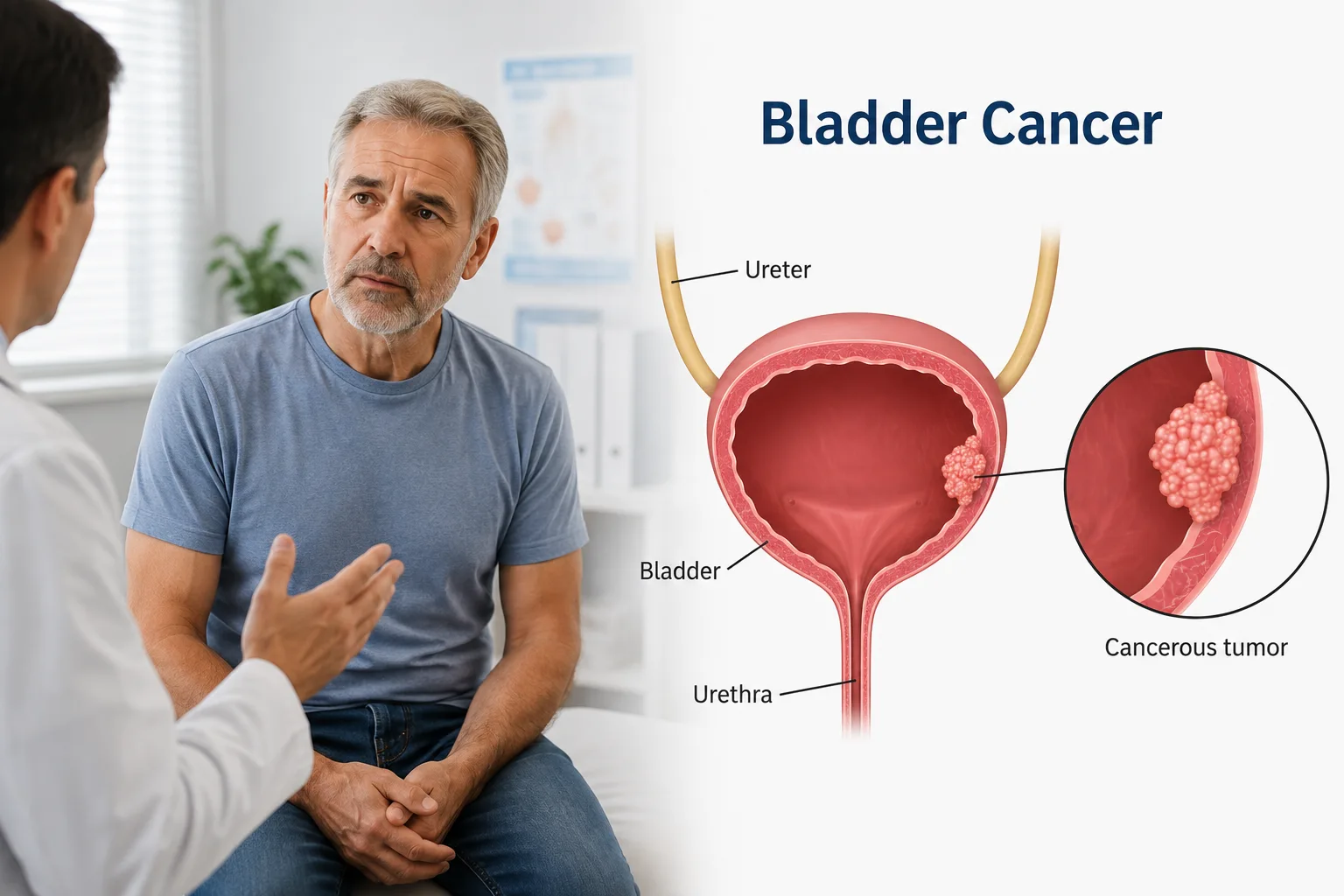
Bladder cancer develops in the tissues of the bladder, most often in the urothelium — the lining of the bladder and urethra. There are three main types: urothelial carcinoma, which is the most common, squamous cell carcinoma, and adenocarcinoma.
If it is not treated, bladder cancer can grow into the muscular wall of the bladder and spread to nearby lymph nodes and to other areas such as the bones, lungs, or liver. Detecting bladder cancer at an earlier stage can expand treatment options and is generally associated with better outcomes.
What causes bladder cancer, and who is at risk?
Tobacco use is the single largest risk factor for bladder cancer, because harmful chemicals from smoking collect in the urine and can damage the bladder lining. Other factors can also increase risk.
Common risk factors include:
- Smoking or other tobacco use
- A family history of bladder cancer
- Long-term exposure to certain workplace chemicals
- Chronic bladder irritation or repeated urinary infections
- Older age
What are the symptoms of bladder cancer?
The most common early sign of bladder cancer is blood in the urine, which may make the urine look pink, red, or brown. Other symptoms can include:
- Frequent or urgent urination
- Painful urination
- Lower abdominal or pelvic pain
- Back pain
It is also possible to have bladder cancer without any symptoms, especially in the early stages. Because blood in the urine can be a sign of a serious condition, it should always be evaluated by a provider.
How is bladder cancer diagnosed?
Evaluation may include a urinalysis, imaging, and cystoscopy. During a cystoscopy, a thin tube with a light and camera is passed through the urethra so the inside of the bladder can be examined. If an abnormal area is identified, tissue may be removed for testing to determine whether cancer is present.
Once bladder cancer is diagnosed, additional testing may be needed to determine its type and stage. Your oncology team uses this information to help develop a treatment plan and coordinates with urology and other specialists involved in your care.
Bladder cancer treatment options at Wellness Oncology & Hematology
Bladder cancer treatment depends on whether the cancer is confined to the inner layers of the bladder or has grown more deeply or spread beyond the bladder. Treatment can involve different specialists and may include procedures to remove the tumor, therapies delivered directly into the bladder, systemic cancer treatments, or surgery, depending on the stage and characteristics of the disease.
At Wellness Oncology & Hematology, our oncology team helps develop an individualized treatment plan and coordinates with urologists and other specialists involved in your care. We explain the role of each recommended treatment so you understand your options and what to expect as care moves forward.
Bladder cancer follow-up and recurrence
Bladder cancer can recur after treatment, which makes ongoing surveillance an important part of care. Follow-up may include cystoscopy, urine testing, imaging, and other evaluations depending on the type and stage of cancer and the treatment received. Your oncology and urology teams can determine the appropriate follow-up schedule and coordinate ongoing care.
Why choose Wellness Oncology & Hematology for bladder cancer care
Bladder cancer care can involve medical oncology, urology, surgery, and other specialties depending on the diagnosis. At Wellness Oncology & Hematology, our board-certified oncology team provides personalized cancer care across two San Fernando Valley locations and works with the other specialists involved in your treatment. We take the time to explain your options, answer questions, and help you navigate the different stages of care.
Schedule a bladder cancer consultation in Tarzana or West Hills
If you have been diagnosed with bladder cancer, received an abnormal test result, or have been referred for oncology care, our team can help you understand your treatment options and next steps. Call our West Hills office at (818) 346-1773 or our Tarzana office at (818) 705-3900, or book your appointment online today.
Bladder cancer FAQs
Is bladder cancer curable?
Many bladder cancers are highly treatable, particularly when diagnosed at an earlier stage. Treatment and outlook depend on the type, stage, and characteristics of the cancer and may involve procedures, therapies delivered into the bladder, systemic cancer treatment, surgery, or a combination of approaches. Your care team can explain which treatments are appropriate for your diagnosis.
Does blood in the urine mean I have bladder cancer?
Not necessarily. Blood in the urine can be caused by infections, kidney stones, and other conditions, not only cancer. Because it can be a sign of something serious, however, blood in the urine should always be evaluated promptly by a provider.
Why does bladder cancer come back?
Bladder cancer can recur after treatment, which is why ongoing surveillance is an important part of care. Your follow-up schedule may include cystoscopy, urine testing, imaging, or other evaluations depending on the type and stage of cancer and the treatment you received.
What is the main cause of bladder cancer?
Tobacco use is the leading cause of bladder cancer. Harmful chemicals from smoking are filtered into the urine, where they can damage the lining of the bladder over time. Avoiding tobacco is one of the most effective ways to lower your risk.
How is early-stage bladder cancer treated?
Early-stage bladder cancer is often treated by removing the tumor through a procedure such as TURBT, sometimes followed by treatment delivered directly into the bladder. The appropriate approach depends on the type and characteristics of the cancer, and your urology and oncology teams can coordinate the treatment plan based on your diagnosis.